
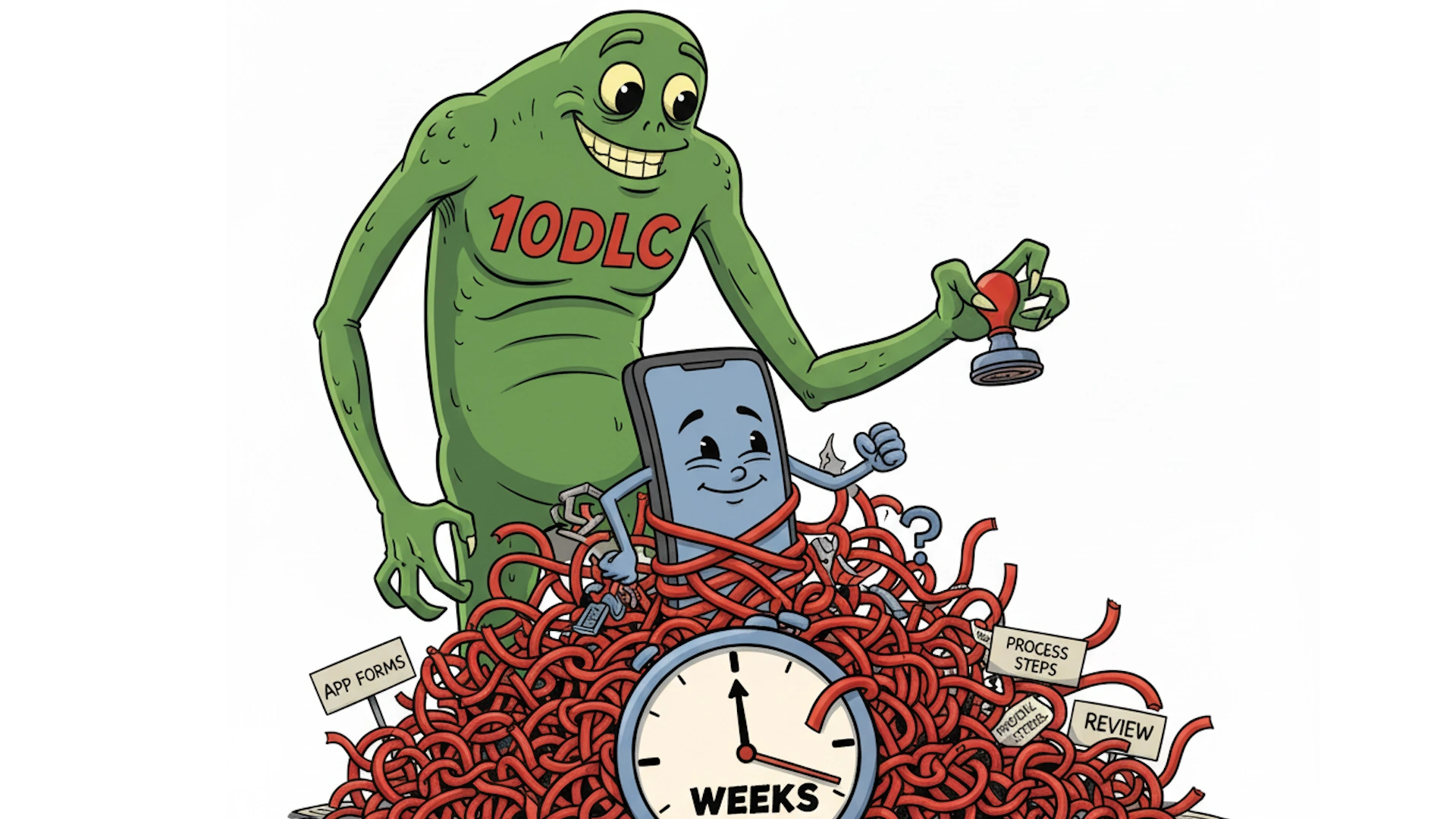
The era of instant SMS is officially over for developers. Just a few years ago, you could buy a phone number and start sending text messages to your users in minutes. Today, the "Wild West" of messaging has been replaced by a dense wall of bureaucracy known as 10DLC. If you are trying to launch a new app that relies on text notifications, you are likely finding yourself stuck in a "pending" status that seems to last forever.
The frustration is real because the registration process has become a major bottleneck for product launches. You might have the perfect code and a beautiful interface, but if your SMS traffic isn't verified, your messages simply won't be delivered. Understanding why this process takes weeks is the first step toward navigating the complexity and finally getting your messages into your users' pockets.
1.
2.
3.
4.
5.
6.
7.
What Exactly is the 10DLC System?
10DLC stands for 10-Digit Long Code, and it is a system created by major mobile carriers to verify the identity of businesses sending messages. The goal is to eliminate spam by ensuring that every sender is a legitimate entity. While this is great for the average consumer's inbox, it has created a massive amount of paperwork and technical verification for developers.
The system requires you to register your "Brand," which is your legal business identity, and your "Campaign," which is the specific reason you are sending texts. Each of these layers must be reviewed and approved by third party aggregators before the carriers allow your traffic through. This multi layered approach is designed to be thorough, but the thoroughness is exactly what causes the significant delays.
The Bottleneck of Manual Vetting
The primary reason for the weeks of waiting is that human beings are often the ones reviewing these applications. There has been a massive surge in 10DLC registrations as carriers have tightened their filters, completely overwhelming the staff at the vetting agencies. When thousands of businesses apply at the same time, a massive queue forms that can take weeks to clear.
Reviewers are incredibly meticulous because they are held accountable by the carriers. Even a tiny discrepancy, such as a slight variation between your legal business name and your tax ID records, can result in an immediate rejection. When you get rejected, you often have to start the entire process over, effectively putting you at the back of a very long line.
The Website Compliance Trap
Carriers do not just look at your application; they also look at your digital presence to ensure you are a real business. If your website does not have a clearly visible privacy policy or a transparent SMS opt in method, your 10DLC application will likely be denied. Many developers are surprised to find that their general website privacy policy is insufficient for SMS standards.
You must include specific language stating that mobile information will not be shared with third parties for marketing purposes. Furthermore, your opt in forms must clearly explain exactly what the user is signing up for and how they can stop receiving messages. If these elements are missing or hidden on a subpage, the vetting agents will flag your brand as non compliant and halt your approval.
The Mystery of Campaign Use Cases
Describing your "Campaign" is often where developers face the most trouble. You have to provide a detailed explanation of why you are messaging users and provide exact templates of the messages you plan to send. If your description is too vague, like simply saying "sending notifications," the carriers will assume you are a high risk sender and deny the request.
The templates must match the actual traffic you intend to send almost perfectly. If the vetting agent sees a template for a security code but you later send marketing blasts, your account can be suspended. This level of scrutiny ensures that businesses are being honest about their intent, but it requires a level of planning that most developers find tedious and time consuming.
Hidden Costs and Business Risks
The pain of the 10DLC nightmare isn't just the lost time; it is the financial impact on your business. Most providers charge registration fees and monthly campaign fees regardless of whether your traffic is actually approved or flowing. This means you could be paying for a service for an entire month before you are even allowed to send your first message.
For a startup, these delays can be catastrophic for a launch timeline. If your user experience depends on a "magic link" or a two factor authentication code sent via SMS, your app is effectively broken until the carriers give you the green light. This risk makes the SMS portion of your infrastructure one of the most volatile components of your entire tech stack.
Shifting Regulations and Moving Goalposts
The rules for 10DLC are not set in stone and frequently change without much warning to the developer community. What was considered a compliant privacy policy last month might be rejected this month due to a new carrier update. Keeping up with these shifting requirements is a full time job that takes you away from actually building your product.
Because the carriers prioritize network security over developer convenience, they have no problem adding new requirements mid stream. This constant state of flux means that even if you follow every guide perfectly, there is still a chance of a "blindside" rejection. Navigating this bureaucracy is a specialized skill that most engineering teams simply don't have the time to master.
Simplifying the Registration Struggle
While you cannot avoid the 10DLC rules if you want to use local numbers, you can change how you approach the problem. The key is to stop treating SMS as a simple API call and start treating it as a complex regulatory challenge. Proper preparation of your legal documents and website compliance before you even hit the submit button can save you weeks of back and forth.
Most developers are now looking for ways to abstract this headache away so they can focus on their core features instead of carrier politics. The best way to ensure your messages get delivered without getting stuck in the manual paperwork loop is to find a partner that understands the nuances of the registration system. You can avoid the manual 10DLC nightmare by using NotifyAPI to handle this.